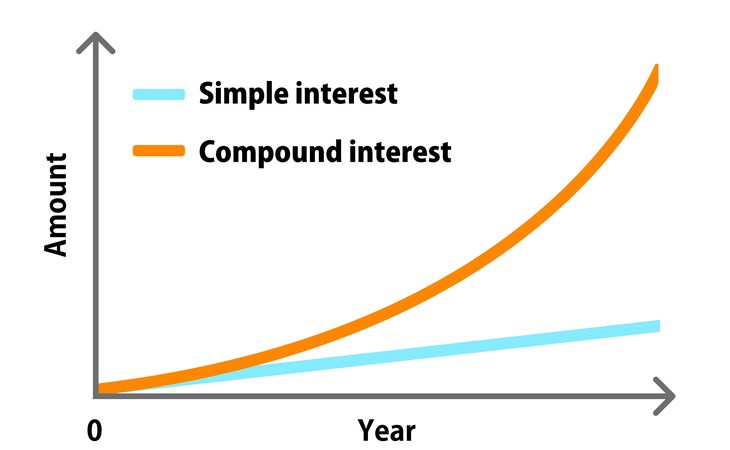
You should know the difference between compound interest and simple interest, so you know exactly how much borrowing money will cost you. We will discuss simple and compound interests and how they differ here. Financial institutions calculate interest in two ways: simple interest and compound interest.
- In simple interest, the principal amount of the loan helps you calculate the interest rate.
- The principal amount is added to the interest accumulated over time in compound interest.
How it Works
It is mainly the amount of interest you will pay over the life of a loan that separates simple interest from compound interest for NBFC Growth in India. Simple interest is more straightforward to calculate than compound interest.
Simple interest is the more affordable option since you only pay interest on the principal amount of the loan. Your outstanding balance will grow rapidly with compound interest because interest accrues on interest.
Whenever possible, borrowers should try to avoid compound interest. An annual percentage rate (APR) on a credit card, for example, is usually very high. Frequently, borrowers find themselves in a tight spot when interest accrues faster than they can pay back the principal.
Conversely, lenders and investors can benefit from compound interest’s rapid growth rate. It can be a powerful tool for building wealth when you can utilize it to your advantage.
Read Also: The Complete Guide to Understanding MCLR
Calculating Simple And Compound Interest
Easy to calculate since a simple interest only takes into account the loan principal. Taking the principal of your loan, multiplying it by your interest rate, and multiplying the result by the number of years you are taking out the loan, is all you need to do.
Simple interest is a simpler form of interest than compound interest. As before, compound interest accrues on interest already accumulated in previous periods. Therefore, interest earns interest based on itself.
Adding the loan principal to the interest rate multiplies the loan principal by one, which is raised to the number of years the loan has been outstanding minus one. The compound interest you earn can be calculated by entering a different compound period depending on the loan period.
Read Also: 8 Easy Ways to Improve Your Personal Loan Eligibility with Bajaj Finserv

 Infohub
[…] Read Also: How Can You Use Simple Interest And Compound Interest To Your Benefits? […]
LikeLike